

Why Watching Isn’t the Same as Doing in Dental Education
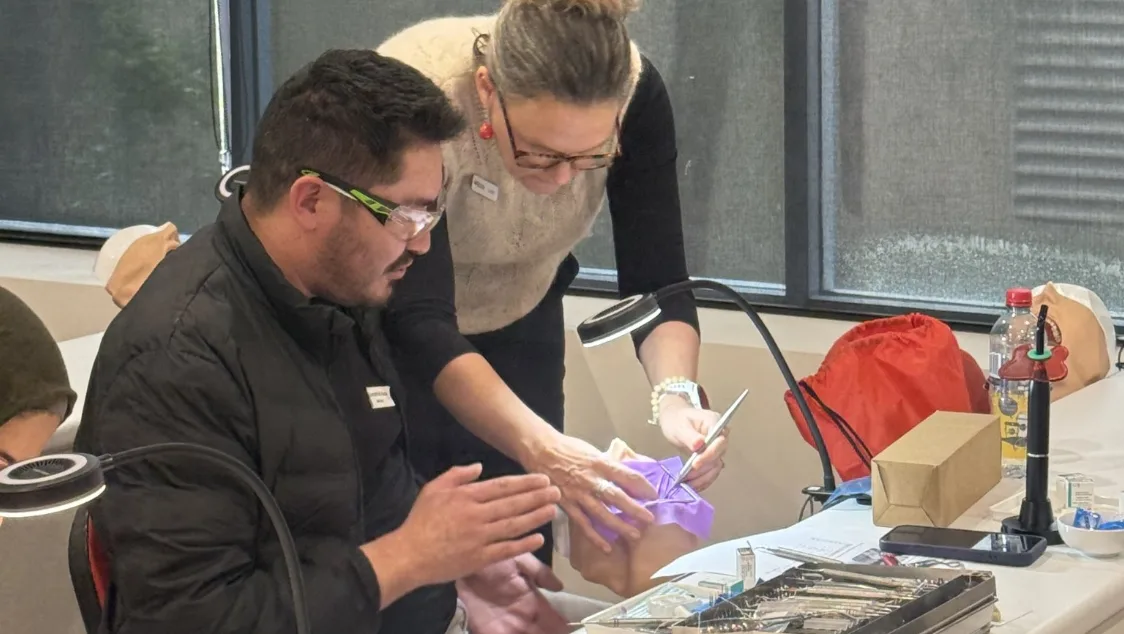
Everything looks much easier when someone else is doing it. But once the instruments are in your hands, the difference between watching an experienced clinician and trying it yourself becomes clear. Observation is an important part of the education process, but most of us learn best when we put that knowledge into practice. Dentistry is no different. A practical, hands-on career requires practical, hands-on training.
At One Dental, we’re an Australian-owned supplier of premium dental products, including simulation equipment for students and educators. We’re committed to helping the next generation of dental professionals develop their skills, which is why we hold regular CPD courses and make our training room available to students preparing for exams. There’s good reason for putting in those extra hours.
Watching builds understanding; doing builds technique
Demonstrations give you an opportunity to concentrate on the steps and intricacies of a procedure before attempting it yourself. You can follow the sequence and see how someone with experience approaches each stage, including instrument selection, clinician positioning, hand placement and movement. There’s a lot of information to absorb before you even begin to apply it.
Once that understanding is there, it’s time for action. Suddenly, your attention is divided in several directions. You’re thinking about visibility, positioning, angles and pressure. None of these concepts are new, but now you have to coordinate them all while working through the procedure yourself.
Just keep in mind that watching and understanding, while important, don’t guarantee that knowledge will immediately translate into a comfortable, confident practical experience. That’s not typically how it works. Knowledge gives you a starting point, but your technique still needs refinement. Observation and performance are complementary stages, not competing teaching methods.

“Observation and performance are complementary stages, not competing teaching methods.”
Some things have to be felt
There are limits to visual learning, and instructions can only take you so far. Terms like light pressure, gentle resistance, stable, adapted or controlled make intellectual sense, but they’re all highly relative. The only way to master them is through physical experience. You have to know what they feel like.
Once you’ve experienced this for yourself, you have a reference point that wasn’t there before. From there, practice helps you recognise differences in resistance, pressure and instrument response rather than relying on verbal descriptions. In dentistry, very small movements can produce very different results, and what you feel through your fingers and the instrument can be just as important as what you see.
If part of training is developing these physical reference points, simulation has an essential role. You can’t develop them for the first time on actual patients. But because students will eventually treat real patients, the anatomy and materials used in training need to be as realistic as possible. Models, teeth, instruments and other equipment should give students meaningful physical feedback.
One attempt won’t work. Repetition is key
When you first try to complete a simulated procedure, there’s a lot competing for your attention. Even after watching a demonstration and knowing the sequence by heart, getting from beginning to end takes a lot of focus. That can make it hard to concentrate on the finer details. Trying again gives you more room to work on those details and refine your technique.
As you build familiarity with each procedure, you’ll start noticing variations between attempts. Perhaps your positioning was better the second time, an instrument felt easier to control or there’s still a particular part that feels completely foreign or awkward. Comparing each attempt helps you make deliberate changes rather than trying to fix everything at once.
And while the doing part is crucial to professional development, the experience of the educator still has enormous value at this stage. Feedback in the moment gives you the chance to adjust a movement or correct an aspect of your technique before it becomes a habit, then apply that correction on your next attempt.
Repetition is essential, but simply doing something again and again won’t necessarily improve your technique. That’s where foundational knowledge and feedback become so important. They give each round of practice a purpose and something specific to work towards.
“Repetition is essential, but simply doing something again and again won’t necessarily improve your technique.”
Bringing observation and hands-on learning together
As mentioned, dental training isn’t about watching versus doing. Theory and practical training both have their place and serve different purposes. The best learning experiences give people the opportunity to build their knowledge, see how it applies and then have enough time to work through it themselves.
This is the exact model we use for One Dental courses. We combine a theory component with hands-on sessions where participants can attempt the procedure multiple times under the supervision of highly experienced educators. Feedback happens in real time, along with clear explanations of why a technique is performed a particular way.
From seeing it done to doing it yourself
Dentistry asks people to turn a considerable amount of knowledge into highly skilled clinical work. Education needs to prepare students for both sides of that equation. What they know is important, but so is their ability to act on it with precision, efficiency and confidence.
At One Dental, we create, manufacture, import and distribute an extensive range of clinically proven, innovative dental products and simulation training equipment. If you’re looking for items to support hands-on dental education or would like to know more about our training facilities, student practice station hire and courses, speak with a friendly member of our team or browse our range online.

Meet the Author
Joanne Stanbury
Joanne is no ordinary entrepreneur. Long before One Dental was born, she had a vision of owning and running her own business. Two decades later, she’s thriving in a traditionally male-dominated industry.
While Joanne started as a dental therapist in the school dental service in Melbourne, she soon realised her passion for the industry extended far beyond her clinical role. She loved sales and marketing and was willing to work anywhere from administration to accounts.
“I’d work wherever in the business. It didn’t faze me. If staff were needed in the warehouse or in marketing or wherever it was, I would just put my hand up because I saw it as an opportunity to learn.”
When she saw a gap in the market, Joanne drew on her extensive knowledge and experience, assembled an amazing team, and set out to change the dental industry.
Beginning with consultancy, Joanne helped dental companies to grow their business by teaching salespeople and customer service officers how to speak to clinicians with the right lingo and product knowledge. Later, she started seeking out international products, building international relationships, and eventually creating her own products for the market.
Today, Joanne remains a hands-on leader. From product development to assembling kits, answering the phone, and even conversing with customers on the webchat, she’s as involved as ever.
Receiving the entrepreneurial grant from the Australian Government is one of the highlights of Joanne’s career. This achievement paved the way for her to introduce an innovative computer system and an e-commerce website to propel the One Dental brand further.
Juggling the responsibilities of motherhood and business ownership herself, Joanne understands the importance of work-life balance and is dedicated to offering her staff a flexible workplace. They go above and beyond for One Dental, and she does the same for them.
When she’s not at work, Joanne is still shooting for greatness, but courtside as a volunteer manager for her daughter’s basketball team. Her all-time favourite activity is wakeboarding.
Frequently Asked Questions
Why is hands-on learning important in dental education?
Hands-on learning gives dental students the opportunity to apply theoretical knowledge and develop the physical skills required for clinical work. It also introduces aspects of technique that are difficult to appreciate through observation alone, such as pressure, resistance and instrument response.
What is dental simulation training?
Dental simulation training allows students to practise clinical procedures using models, teeth, instruments and other equipment before performing those procedures on patients. Realistic simulation equipment can provide useful physical feedback and help students become familiar with the demands of different techniques.
Can dental students learn clinical skills by watching demonstrations?
Demonstrations are an important part of dental education because students can observe procedure sequences, instrument selection, positioning and technique. However, observation alone cannot develop the physical skills required to perform a procedure. Theory, demonstration and hands-on experience serve different purposes within training.
Why is repetition important when learning dental procedures?
Repeating a procedure gives students more opportunities to refine their technique once the basic sequence becomes familiar. It also allows them to compare different attempts, respond to educator feedback and concentrate on specific areas that need further work.
How realistic should dental simulation training be?
Dental students are ultimately preparing to work with real patients, so simulation anatomy, materials and equipment should provide a meaningful representation of the clinical task. Realistic models and equipment can help students develop useful physical reference points before entering a clinical setting.