

How Dental Loupes and Lighting Improve Visibility and Posture
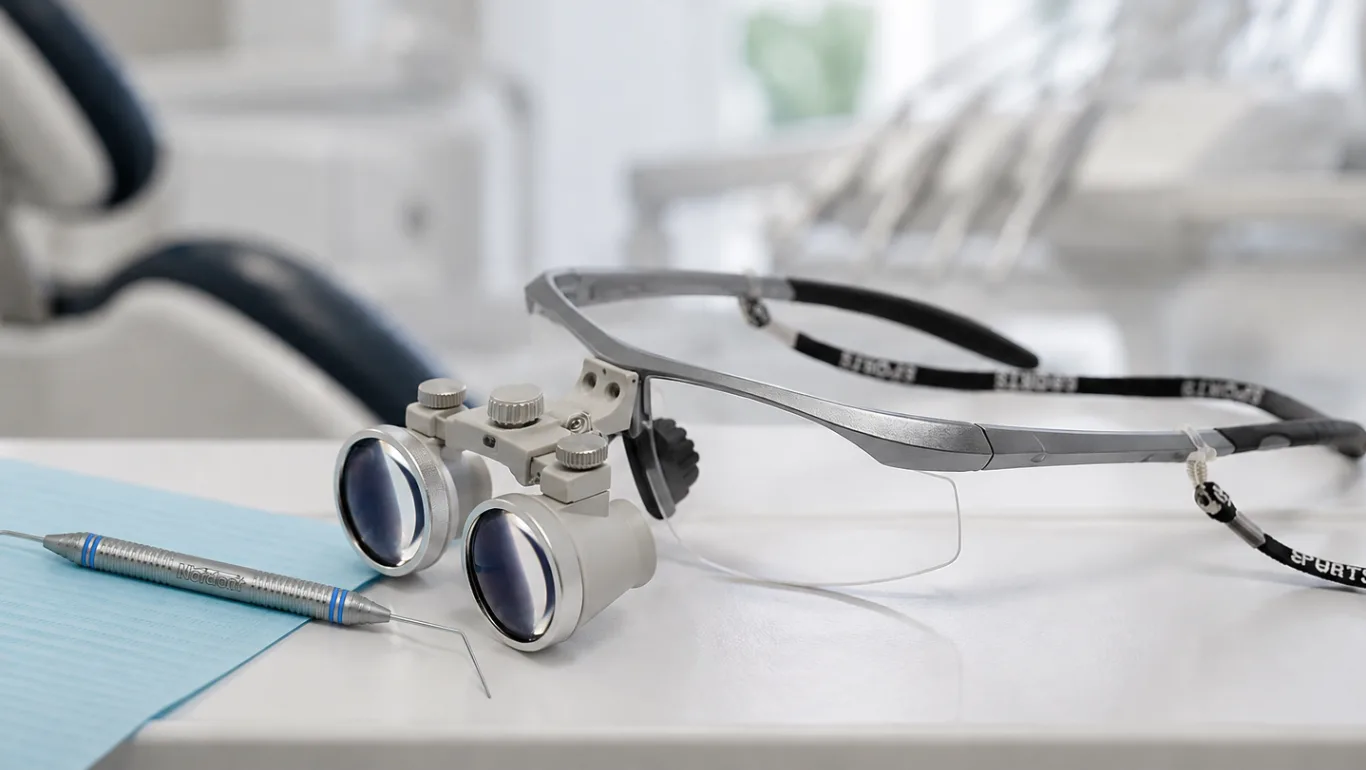
For a career based on teeth, dentistry asks an awful lot of your eyes and the rest of your body. The work requires clinicians to see very small details while maintaining precise control, often for extended periods of time. Poor visibility can encourage moving closer to the working area or the adoption of awkward positions in order to get a clearer view. That’s why dental loupes and lighting are so crucial, not just for visibility, but for posture too!
At One Dental, we’re your Australian-owned go-to supplier of premium dental products for professionals, students and educators. We’re there from the early days of training through to years in practice, and we want those years to be long and comfortable ones. Here’s what you need to know about ergonomics, loupes and lighting.
How dental loupes improve clinical visibility
Dental loupes enlarge the working area to make fine details easier to distinguish than they would be with unaided vision. Depending on the procedure type and magnification used, things like periodontal probe markings, calculus, lesions and individual tooth structures can all be much clearer. And it’s not just about appearing bigger. Good optics also need sufficient resolution and contrast to provide a sharp, well-defined view of the treatment area.
A common assumption is that greater magnification means better visibility, but there is a trade-off. As magnification increases, the field of view becomes smaller. The depth of field also decreases, which means there’s less distance over which the image remains sharply focused. Lower magnification generally provides a wider field and greater depth, which can be useful for general clinical work. It can also be easier when first adapting to loupes. Higher magnification, however, provides greater detail and may be more appropriate for work where close visual discrimination is essential.
Choosing the right magnification is only part of the equation. Loupes also need to be properly fitted to the individual, with factors such as working distance, interpupillary distance and declination angle taken into account. Get these wrong, and the wearer may find themselves adjusting their position simply to maintain a clear, focused view.

“More light doesn’t always equal a better view.”
How the right loupe setup supports better posture
The connection may not be immediately obvious, but loupes can definitely support better posture as they define the working distance. When that distance is correctly matched to the wearer, the treatment area comes into focus while they sit in their intended working position. If the working distance is too short, they’ll eventually find themselves leaning or flexing their neck to bring the operative field into focus.
Declination angle is equally important. This determines how far downward the clinician can direct their gaze through the loupes without having to lower their head to follow it. When correctly matched to the wearer, the amount of forward neck flexion required to see properly is reduced. A shallow or poorly matched angle can have the opposite effect, causing them to drop their head or constantly lean forward.
But better ergonomics are not automatically guaranteed by wearing loupes. Research suggests magnification can support a better working posture, but the results depend on factors such as loupe design, fit and how they are used. This is where individual fitting comes in. Working distance should align with the wearer’s own dimensions and the position in which they actually work, while declination angle and interpupillary distance also need to suit the individual. A properly fitted setup should allow the wearer to maintain a clear view without having to repeatedly adjust their head, neck or upper body to compensate.
Why lighting matters when working with magnification
Magnification can make the treatment area larger, but it can’t compensate for poor lighting. Adequate illumination helps maintain contrast and makes fine structures easier to see, particularly in areas of the mouth that overhead lighting may struggle to reach.
A loupe-mounted light follows the wearer’s line of sight and keeps the area of focus illuminated as they move. It can also reduce shadows from the head or hands and the need to continually reposition an overhead light. Coaxial illumination directs light close to the visual axis, which can be particularly useful in deeper or less accessible areas of the mouth.
More light doesn’t always equal a better view. In fact, excessive brightness can cause glare and visual discomfort, while a consistent beam provides more even illumination. Additional considerations include weight, battery life and charging, because loupes are often worn right throughout the day.
“Get that combination right and you’re investing in more than a clearer view. You’re giving yourself a setup designed to support you through many years in dentistry.”
Getting used to dental loupes and making them work for you
When you first start wearing dental loupes, it’s normal to have a bit of an adjustment period. Magnification does change the way you perceive the working area, so movements and hand-eye coordination can take some getting used to. To help build familiarity, it’s best to use them for short, regular periods before wearing them for longer clinical procedures.
While initial awkwardness is normal, persistent difficulty maintaining a clear image or comfortable position is probably not just a case of ‘new loupes’. If the view regularly falls out of focus, the field feels restricted or you keep having to adjust your posture to compensate, the setup should be checked to ensure it’s correctly fitted and adjusted.
Loupes also need regular care to protect the optics and keep everything working properly. Always clean the lenses with products and methods recommended by the manufacturer, particularly where optical coatings are present. Regularly check frames, hinges, nose pads, mounts and light connections for looseness or damage. Lastly, batteries and charging equipment should also be cared for according to the manufacturer’s instructions, as requirements vary between systems.
Choosing dental loupes and lighting
The right setup is ultimately a very personal one. What works well for one person may not suit another, which is why your choice of loupes and lighting should reflect the work you do and the way you work. Get that combination right and you’re investing in more than a clearer view. You’re giving yourself a setup designed to support you through many years in dentistry.
At One Dental, our knowledgeable team can help students and professionals select the right products and equipment, including dental loupes.
Contact us to learn more or browse our complete catalogue online now.

Meet the Author
Joanne Stanbury
Joanne is no ordinary entrepreneur. Long before One Dental was born, she had a vision of owning and running her own business. Two decades later, she’s thriving in a traditionally male-dominated industry.
While Joanne started as a dental therapist in the school dental service in Melbourne, she soon realised her passion for the industry extended far beyond her clinical role. She loved sales and marketing and was willing to work anywhere from administration to accounts.
“I’d work wherever in the business. It didn’t faze me. If staff were needed in the warehouse or in marketing or wherever it was, I would just put my hand up because I saw it as an opportunity to learn.”
When she saw a gap in the market, Joanne drew on her extensive knowledge and experience, assembled an amazing team, and set out to change the dental industry.
Beginning with consultancy, Joanne helped dental companies to grow their business by teaching salespeople and customer service officers how to speak to clinicians with the right lingo and product knowledge. Later, she started seeking out international products, building international relationships, and eventually creating her own products for the market.
Today, Joanne remains a hands-on leader. From product development to assembling kits, answering the phone, and even conversing with customers on the webchat, she’s as involved as ever.
Receiving the entrepreneurial grant from the Australian Government is one of the highlights of Joanne’s career. This achievement paved the way for her to introduce an innovative computer system and an e-commerce website to propel the One Dental brand further.
Juggling the responsibilities of motherhood and business ownership herself, Joanne understands the importance of work-life balance and is dedicated to offering her staff a flexible workplace. They go above and beyond for One Dental, and she does the same for them.
When she’s not at work, Joanne is still shooting for greatness, but courtside as a volunteer manager for her daughter’s basketball team. Her all-time favourite activity is wakeboarding.
Frequently Asked Questions
Is higher magnification always better with dental loupes?
No. Higher magnification provides greater detail, but it also reduces the field of view and depth of field. Lower magnification provides a wider field and greater depth, which can suit general clinical work and may be easier when first adapting to loupes.
Can dental loupes help improve posture?
They can, but only when they are properly fitted and used. The right working distance and declination angle can help reduce the need to lean forward or flex your neck to see the treatment area clearly.
Why should dental loupes be individually fitted?
Working distance, interpupillary distance and declination angle all need to suit the individual wearer. A poor fit can leave you repeatedly adjusting your head, neck or upper body just to maintain a clear view.
Do I need a light with dental loupes?
Magnification can’t compensate for poor lighting. A loupe-mounted light keeps illumination directed towards the area you’re viewing and can reduce shadows from your head or hands. It can also reduce how often you need to reposition an overhead light.
How long does it take to get used to dental loupes?
There can be an adjustment period when you first start using loupes, particularly as you adapt to magnification and changes in hand-eye coordination. Short, regular periods of use can help. If you continually lose focus or struggle to find a comfortable working position, however, the fit may need to be checked.