

Local Anaesthesia Techniques
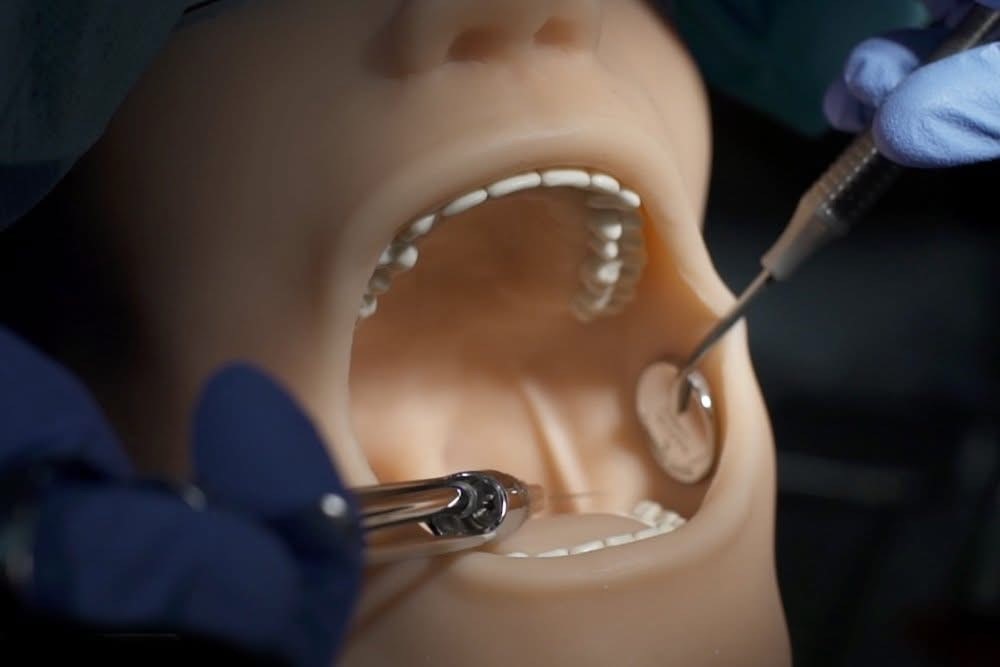
Atraumatic Extraction of Primary Teeth
Join Assoc. Prof. Cathy Snelling and Leah Hobbs for a highly practical, hands-on workshop designed to build your confidence in the safe and atraumatic extraction of primary teeth. Explore key principles, techniques and instrumentation while developing an understanding of how to minimise trauma and protect the surrounding tissues.
Whether you’re new to primary tooth extractions or looking to refine your clinical technique, this workshop combines clear clinical theory with hands-on practice, so you leave feeling confident and ready to apply what you’ve learned in your practice.
Course Description
What you'll learn: Build your confidence and clinical skills in local anaesthesia with One Dental’s Local Anaesthesia Update & Upskill Workshop. This practical, hands-on course is designed for dental professionals looking to refresh their knowledge, strengthen their injection techniques and develop greater confidence in delivering safe and effective local anaesthesia.
- Explain the role of pain-free anaesthesia in patient trust, comfort, and retention.
- Identify the neuroanatomy relevant to dental LA, including trigeminal nerve branches and dermatomes.
- Select the appropriate technique for anaesthetising specific maxillary and mandibular sites, including IAN, Gow-Gates, and mental blocks.
- Calculate maximum safe dosages and identify overdose risk for common LA agents.
- Apply comfort-focused delivery techniques, including topical anaesthetics, needle selection, and computer-assisted systems.
- Administer LA safely and confidently within scope of practice, informed by case-based clinical reasoning.
Top features Include
-
Includes a pre-course online module, a hands-on workshop, and a post-course online component
-
Covers key concepts such as clinical reasoning, injection techniques, safety, dosing & complication management
-
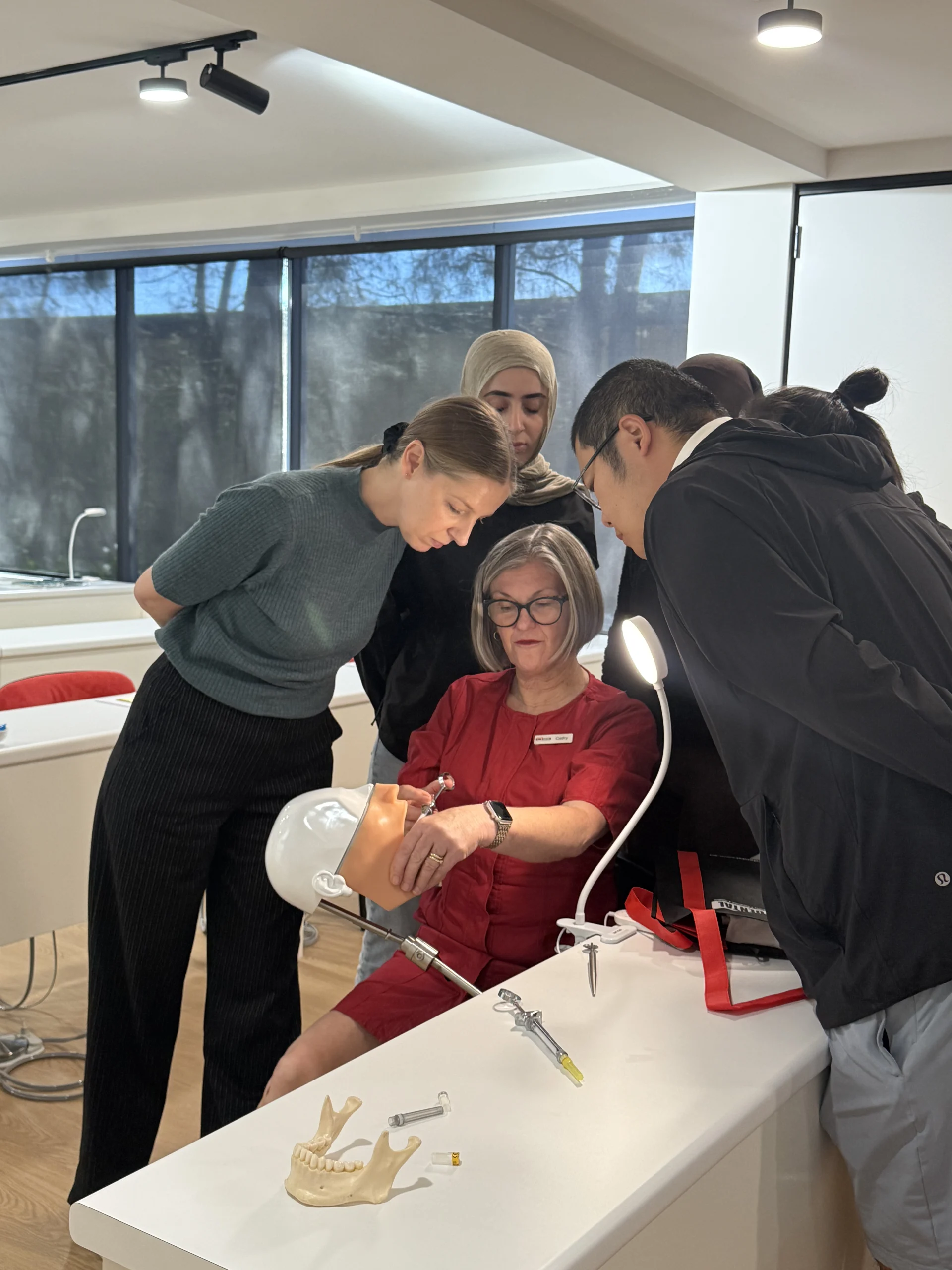
A hands-on section where participants rotate between supervised injection practice and case-based scenario discussion.
-
Learn under the guidance of leading oral health professionals
Skills You Will Gain
- Apply clinical reasoning to select appropriate LA techniques based on the procedure, site and patient presentation.
- Understand local anaesthetic agents, including their properties, indications, metabolism and safety profiles.
- Calculate maximum safe dosages and make appropriate agent selections for different patient needs.
- Identify relevant anatomy and nerve pathways to improve the success and safety of LA administration.
- Practise maxillary and mandibular injection techniques, including infiltration and nerve blocks.
- Apply patient-comfort techniques, including effective topical anaesthetic application and slow, controlled delivery.
- Recognise and manage potential risks, complications and contraindications associated with local anaesthesia.
- Build practical confidence through supervised hands-on practice and case-based decision-making.
In Person Workshop Description
Refining & Revising your Local Anaesthesia Techniques
Build stronger diagnostic confidence by understanding the biological factors that influence pulpal health, disease progression and treatment outcomes.
- Review the morphology and histology of primary teeth and its relevance to caries progression
- Discuss the general approach clinicians should take to maintaining pulpal health in primary teeth
- Differentiate between signs and symptoms of different types of dental pain
- List and discuss the specific factors that affect clinical decision-making and treatment
- Discuss challenges involved in accurate pain diagnosis in children and adolescents
- Differentiate between histological & clinical features of:
- a healthy pulp
- reversible pulpitis
- irreversible pulpitis
- a necrotic pulp
Course Introduction 4 lessons
- Welcome to the Course
- The In-Lesson Course Structure
- Overview of in Person Workshop Day
- Outline and Objectives
Pre Workshop Theory 7 lessons
- Understanding Pain & Role of Local Anaesthesia
- Basic Nerve Physiology & Impulse Transmission
- How Local Anaesthethic Agents Work
- Oral Nerve Supply and Clinical Landmarks
- Local Anaesthetic Agents Used in Dentistry
- Applying Local Anaesthesia Safely in Clinical Practice
- Check Point Quiz
Post Workshop Theory 7 lessons
- Pain is individual and must be managed with patient-centred care
- Local anaesthetic agents interrupt nerve impulse transmission
- Diffusion and tissue conditions affect LA success
- Anatomical knowledge supports safe and predictable LA
- Agent selection should be based on clinical need and patient safety
- Incomplete anaesthesia should be assessed systematically
- Check Point Quiz
Course Wrap Up 3 lessons
- Wrapping things Up
- Continue Your Learning
- The SITE Community

‘‘Thank you, I enjoyed the course and really appreciated the group discussions which encouraged reflection on shared experiences. Discussion and guidance by the tutors was friendly and open, without judgement, so questions could be asked confidently. I appreciated the refresher on toxicity and anatomy, and particularly valued the information about the mesial root for upper 6’s, with reminder to allow LA for this area as well to achieve fully effective LA.
The handouts were helpful at the beginning and end of the course. A really positive experience- thank you!’’
‘‘No Matter how long you’ve been working there is always something to learn. The course helped to refresh our knowledge and gave handy tips for improving LA success and delivering teeth atraumatically. The opportunity to talk with people with varying career histories was invaluable and reinforced learning from each other.’
‘‘Such a fantastic course – really informative and engaging. Jo, Cathy, and Leah made the session so relaxed (it didn’t feel like a classroom at all yet I learnt so much!). 100% would recommend OneDental for CPD!’’
“The hands on workshop focused on Atraumatic Extraction of Primary Teeth and & Local Anaesthesia Techniques was amazing and far exceeded my expectations!
The presenters were absolutely brilliant in the way they delivered the content, as well as how they allowed the participants to interact and ask questions, which made the learning experience just perfect!
Thank you so much One Dental Jo Stanbury, Cathy Snelling and Leah Hobbs for organising the most enjoyable CPD event I have ever attended!
I can’t wait to see you guys back here in Perth again with more topics.“
“The One Dental Atraumatic Extraction and LA course was nothing short of exceptional.
It was insightful, dynamic, and packed with hands-on learning that left me feeling confident and ready to put these skills straight into practice.
Cathy’s presentation on LA was an absolute highlight – a brilliant BRUSH up for anyone wanting a refresher on techniques, while also diving into the all-important question of which anaesthetic to use and when.
Leah was equally fantastic, guiding us through the course with clarity and enthusiasm. It went EXTRACT-ly as I’d hoped – engaging, practical, and highly relevant to daily clinical work.
Since completing the course, I’ve been incorporating periotomes and luxators into my extractions with a new level of confidence. Most importantly, it’s been a real game-changer in ensuring greater comfort for my patients.“
Frequently Asked Questions
Who is this course for?
- Oral health therapists
- Dental therapists
- CPD-seeking clinicians wanting to update their skills on periotomes, luxators, and modern instrument selection
What will I learn in this course?
- Oral health therapists
- Dental therapists
- CPD-seeking clinicians wanting to update their skills on periotomes, luxators, and modern instrument selection
How can I access the course?
- Oral health therapists
- Dental therapists
- CPD-seeking clinicians wanting to update their skills on periotomes, luxators, and modern instrument selection