

Getting the Most from Your Instrument Processing Routine
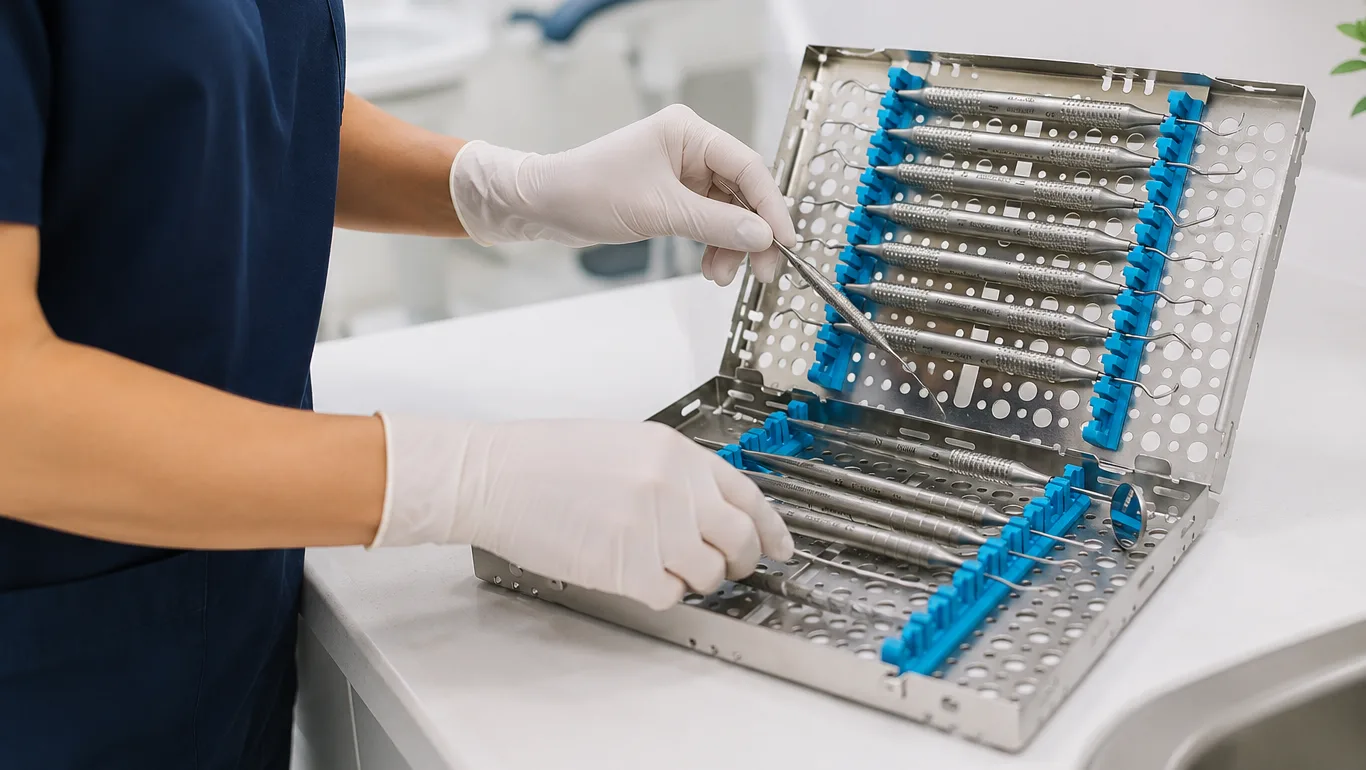
Instruments go through a series of steps before they arrive ready for use in the treatment room or simulation clinic. In fact, this process is one of the most important routines in any dental setting. Every stage matters, from cleaning and inspection through to packaging, sterilisation and storage. Even small oversights can impact instrument longevity, efficiency and infection control.
At One Dental, we’re your Australian-owned provider of premium dental products for education and private practice. Consistent instrument processing protects patients while also protecting your investment in quality tools and equipment. Developing good habits early is just as important because students carry those habits with them into the workforce.
Start with preparation, not sterilisation
During dental training, it’s easy to focus on the sterilisation cycle itself and think the process begins once instruments are placed in the autoclave. Effective processing actually starts the moment they’re used. Cleaning is the first step because sterilisation alone can’t remove debris left behind and in a clinical setting, that includes visible blood, tissue, composite and cement, among other contaminants. Not only must it be removed because it’s unhygienic, it can also prevent steam from reaching every surface during the sterilisation cycle.
While cleaning, it’s important to inspect each instrument before it returns to service. Check for corrosion, cracks, loose joints, worn cutting edges or any other signs of damage that could affect performance or patient safety. Instruments that appear damaged should never be sterilised and returned to use. They should be removed from service and replaced where necessary.
Always follow the manufacturer’s recommendations regarding cleaning agents, processing methods and sterilisation parameters, as different instruments may have different requirements. Once instruments are clean and dry, they should be packaged according to those instructions using an appropriate sterilisation pouch or cassette. Avoid overcrowding, as steam needs to circulate freely around each instrument during the cycle. Packing instruments too tightly can also increase the risk of them rubbing against one another and becoming damaged.
Good sterilisation habits
Good habits during the sterilisation cycle can help support consistent results and reduce the risk of avoidable mistakes. Some of the most important include:
- Load the chamber correctly. Arrange pouches and cassettes so steam can circulate freely around every item.
- Avoid overloading. Crowding the chamber can interfere with steam circulation and affect sterilisation.
- Choose the correct cycle. Always select the cycle recommended for the type of load being processed.
- Monitor every cycle. Use the appropriate indicators and follow your workplace protocols to confirm the cycle has performed as expected.
- Allow instruments to dry completely. Avoid handling or storing damp pouches, as moisture can compromise sterility.
Protecting your instruments between uses
Once complete, storage is next. Instruments should be fully dry before being stored in a clean, dry environment until they’re needed again. Correct storage helps maintain sterility and reduces the risk of contamination before use. They should also be handled with care. Damaged pouches, torn wraps or rough handling can compromise sterility or damage the contents before they even reach the treatment room.
Instrument cassettes can also make a significant difference. They help organise instruments throughout the processing cycle, reduce unnecessary handling and provide additional protection during cleaning, sterilisation and storage.
Careful cleaning, sterilisation and maintenance are not just about making instruments last longer and protecting your investment in quality tools and equipment. They’re also about supporting clinician comfort in handling and reliable clinical performance throughout their working life.
Reviewing your routine regularly
While instrument processing can feel like second nature after repeating the same steps day after day, it’s important not to switch to autopilot. Even well-established procedures need to be reviewed from time to time. New instruments, updated manufacturer recommendations and changes to infection control guidance can all affect the way instruments should be processed.
It can be helpful to review procedures as a team to ensure everyone follows the same process and reduce variation between operators. New staff and students also benefit from consistency and regular refresher training rather than learning different methods from different people. If problems do arise, it’s much easier to identify which part of the process needs attention when everyone is following the same approach.
Keeping records of servicing, validation and maintenance makes it much easier to confirm equipment is performing as expected and to flag recurring issues before they affect daily operations. Good documentation also provides a clear history if equipment performance changes or faults need to be investigated.
Need quality instruments for education and practice?
Instrument processing isn’t the most visible part of dentistry, but it’s one of the foundations that everything else relies on. Developing careful, consistent habits early helps create a standard that’s easier to maintain throughout your career.
At One Dental, we offer an extensive range of high-quality dental products and instruments. Whether you’re replacing individual items or building a complete kit, our team can help you make informed choices that support long-term performance and reliability. And with the right care, they will do just that for many years to come.
Contact us to learn more or browse our complete catalogue online now.

Meet the Author
Joanne Stanbury
Joanne is no ordinary entrepreneur. Long before One Dental was born, she had a vision of owning and running her own business. Two decades later, she’s thriving in a traditionally male-dominated industry.
While Joanne started as a dental therapist in the school dental service in Melbourne, she soon realised her passion for the industry extended far beyond her clinical role. She loved sales and marketing and was willing to work anywhere from administration to accounts.
“I’d work wherever in the business. It didn’t faze me. If staff were needed in the warehouse or in marketing or wherever it was, I would just put my hand up because I saw it as an opportunity to learn.”
When she saw a gap in the market, Joanne drew on her extensive knowledge and experience, assembled an amazing team, and set out to change the dental industry.
Beginning with consultancy, Joanne helped dental companies to grow their business by teaching salespeople and customer service officers how to speak to clinicians with the right lingo and product knowledge. Later, she started seeking out international products, building international relationships, and eventually creating her own products for the market.
Today, Joanne remains a hands-on leader. From product development to assembling kits, answering the phone, and even conversing with customers on the webchat, she’s as involved as ever.
Receiving the entrepreneurial grant from the Australian Government is one of the highlights of Joanne’s career. This achievement paved the way for her to introduce an innovative computer system and an e-commerce website to propel the One Dental brand further.
Juggling the responsibilities of motherhood and business ownership herself, Joanne understands the importance of work-life balance and is dedicated to offering her staff a flexible workplace. They go above and beyond for One Dental, and she does the same for them.
When she’s not at work, Joanne is still shooting for greatness, but courtside as a volunteer manager for her daughter’s basketball team. Her all-time favourite activity is wakeboarding.