

How to Spot Subtle Damage in Commonly Heavily Used Dental Instruments
Unfortunately, the tools you rely on can’t just tell you when something isn’t right. Dental instrument failure rarely happens suddenly; it’s subtle. Wear and damage build slowly until, eventually, you start to notice the impact on performance and patient outcomes. And in a professional setting, many instruments are heavily used. It happens.
At One Dental, we’re an Australian-owned supplier of premium dental products for students, educators and those in private practice. We stock an extensive range of high-quality instruments, and like any tool used constantly in clinical settings, there is a natural point where signs of wear begin to appear.
Why subtle damage often goes unnoticed
Dental instruments are in use all day, every day, so their condition becomes familiar. With that familiarity, slight deviations are easier to miss as they start to blend in. Most clinicians adapt without realising. They apply more pressure or alter their technique to compensate. The instrument may no longer be performing as it once did, but this becomes the ‘new normal’.
When things get busy in the clinic, instruments are typically checked but not always examined in the level of detail needed to catch fine defects like micro-chipping, edge rounding or early pitting. These are difficult to see without proper lighting and a little magnification. Sterilisation workflows focus on cleanliness and compliance but can miss issues affecting functional condition.
The thing with gradual wear, and the reason tools are often used longer than is ideal, is that instruments still work, they just may not work as efficiently. Over time, this can lead to increased force, longer procedure times and reduced precision
What are the early signs of wear in cutting and working edges?
Following repeated use and sterilisation cycles, cutting edges will slowly lose sharpness. This may become noticeable in the cleanness and definition of a cut, especially along margins. You may also start to see slight tearing or roughness rather than a smooth finish, and the instrument may feel less decisive in its action, even when technique remains unchanged.
Micro-chipping and other irregularities will also affect how clean the cut and finish is. An instrument with small chips may catch or skip slightly during use, and finishes can appear less even or slightly disrupted along the margins. There may also be subtle vibration or inconsistency in contact that wasn’t there before.
Lastly, keep an eye out for changes in how the instrument engages with tooth structure and materials. It may not track as cleanly along the surface, which is often more obvious in areas that are usually well controlled. Contact can also become inconsistent from one pass to the next, even within the same area. At times, the instrument may not respond the way it normally does.
The surface changes that affect instrument handling and performance
Scratches, pitting or roughness
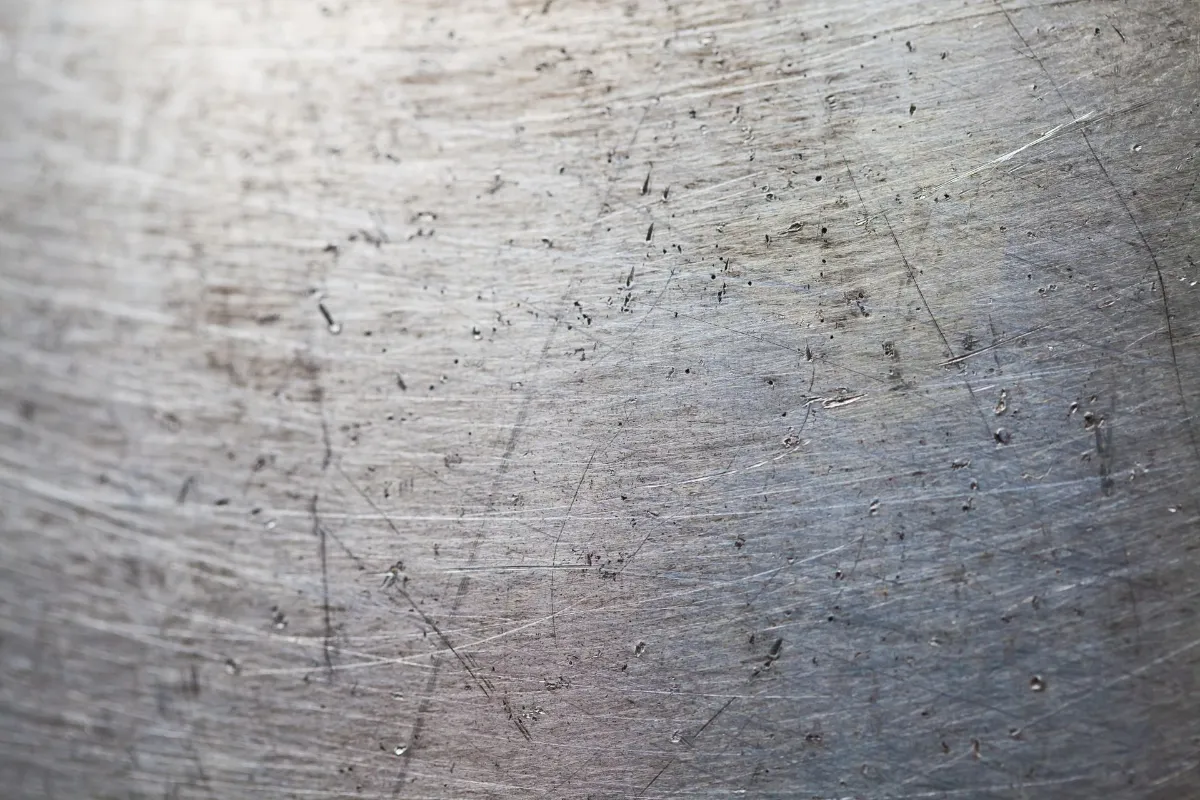
When this happens, the surface may appear less uniform under direct light, with fine scratches or small pits becoming visible. Areas that were once smooth may start to look slightly textured or uneven. These marks are more likely to develop in high-contact zones rather than across the entire instrument.
Discolouration or staining
Corrosion or surface breakdown may lead to darkening, spotting or uneven colouring of the instrument. Stains that don’t resolve with cleaning can indicate early corrosion rather than residue. These changes typically begin in isolated patches rather than across the whole instrument.
Frequent material adhesion
If materials like composite are sticking more often or more stubbornly than before, it may be a sign of surface degradation. This can mean needing to clear the instrument more frequently during use or seeing build-up form more quickly.
Structural issues that mean deeper problems
Any slight bending, misalignment or loss of original shape, even minor distortions, can affect how the instrument aligns with the intended working angle.This is particularly concerning during high-precision tasks. Signs include tips or working ends that appear slightly off-centre or no longer symmetrical compared to their original form. As with surface issues, these changes often occur gradually due to repeated force, frequent exposure to sterilisation heat and general handling.
In multi-part instruments, loosening of joints or components can signal structural issues. Hinged instruments, for example, may develop slight play or movement where there was none before. This can present as inconsistent opening and closing or reduced stability during use. Wear at connection points can also affect precision and control.
Reduced balance or an altered feel in the hand during use is another concern. Even without a visible defect, weight distribution can shift due to internal wear, material loss or structural change, and this can interfere with fine movements that rely on steady handling.
Talk to the dental supply experts
The sooner you identify an instrument nearing the end of its life, the better you can support consistent performance and safer outcomes. These changes appear gradually before anything obvious, which is why regular inspection and timely replacement are so important.
At One Dental, we know quality matters. We want you to get value from your product selection, but also recognise when performance starts to fall short, and it’s time to replace rather than push a dental tool beyond its limits.
Contact our experienced, friendly team today for help, or browse our extensive catalogue online now.
Also, we launched our new XpressEdge Sharpener at ADX 2026, which allows you to have fast, precise sharpening in seconds with no special training required. Check it out here.

Meet the Author
Joanne Stanbury
Joanne is no ordinary entrepreneur. Long before One Dental was born, she had a vision of owning and running her own business. Two decades later, she’s thriving in a traditionally male-dominated industry.
While Joanne started as a dental therapist in the school dental service in Melbourne, she soon realised her passion for the industry extended far beyond her clinical role. She loved sales and marketing and was willing to work anywhere from administration to accounts.
“I’d work wherever in the business. It didn’t faze me. If staff were needed in the warehouse or in marketing or wherever it was, I would just put my hand up because I saw it as an opportunity to learn.”
When she saw a gap in the market, Joanne drew on her extensive knowledge and experience, assembled an amazing team, and set out to change the dental industry.
Beginning with consultancy, Joanne helped dental companies to grow their business by teaching salespeople and customer service officers how to speak to clinicians with the right lingo and product knowledge. Later, she started seeking out international products, building international relationships, and eventually creating her own products for the market.
Today, Joanne remains a hands-on leader. From product development to assembling kits, answering the phone, and even conversing with customers on the webchat, she’s as involved as ever.
Receiving the entrepreneurial grant from the Australian Government is one of the highlights of Joanne’s career. This achievement paved the way for her to introduce an innovative computer system and an e-commerce website to propel the One Dental brand further.
Juggling the responsibilities of motherhood and business ownership herself, Joanne understands the importance of work-life balance and is dedicated to offering her staff a flexible workplace. They go above and beyond for One Dental, and she does the same for them.
When she’s not at work, Joanne is still shooting for greatness, but courtside as a volunteer manager for her daughter’s basketball team. Her all-time favourite activity is wakeboarding.